The Toyota Prius ( PREE-əss), known in Japanese as トヨタ・プリウス (Toyota Puriusu), is a car that has been produced by Toyota since 1997, spanning five generations. At its core, the Prius features a hybrid drivetrain, famously called Hybrid Synergy Drive, which combines an internal combustion engine and an electric motor. The Toyota Prius holds the distinction of being the world’s first mass-produced petrol-electric hybrid vehicle. Its domestic launch in late 1997 marked the culmination of a concerted, five-year effort by Toyota Motor Corporation to develop and bring to market a practical, low-emission family vehicle. The name "Prius" itself is derived from Latin, where it is the neuter singular of the comparative form (prior, prior, prius) of an adjective meaning 'to go before', a fitting title for such a breakthrough vehicle.
Conception and Early Hybrid Roots
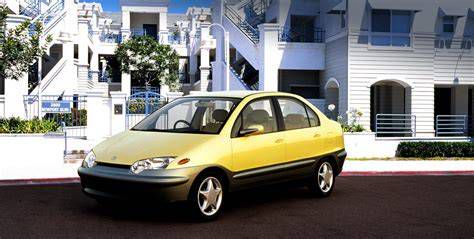
The journey to the Prius intensified in 1993, when in-house discussions over a "vehicle for the 21st century" got under way. Toyota initially sought to join the Partnership for a New Generation of Vehicles (PNGV) program in the US, but was blocked due to the program's unstated purpose of aiding domestic manufacturers against imports. This spurred Chairman Eiji Toyoda to focus on automobile efficiency, leading to the internal project initially named G21-short for "a global car for the 21st century." Takeshi Uchiyamada, an engineer schooled in applied physics, was handed the responsibility for spearheading this project. Uchiyamada’s assertive boss, Akiro Wada, ambitiously doubled the initial G21 goal of a 50-percent gain in gas mileage and selected the 1995 Tokyo Motor Show as the time and place for presenting Toyota’s future concept, which they successfully achieved with the show car.
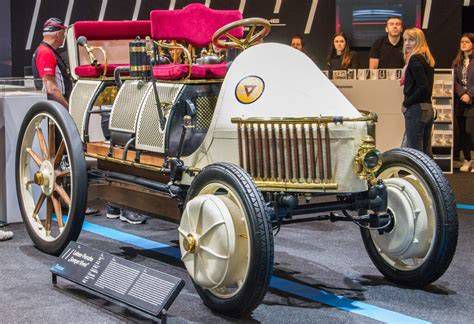
While Toyota pioneered mass-produced hybrid technology, the concept of a hybrid vehicle itself predates the Prius by many decades. What we now call a hybrid dates to the late 19th century when early car designers struggled to find sufficient power to move their carriages. Vehicles with both an internal combustion engine and electric motor have existed as far back as 1898. Two gasoline-electric proposals appeared at the 1899 Paris Salon. The following year, Ferdinand Porsche, while employed at the Lohner Works in Austria, designed and developed the first successful series hybrid in 1900, with a 1903 example featuring four electrically driven wheels energized by two generators, each powered by a 2.5-horsepower Daimler engine. Other early hybrids included the Owen Magnetic, a serial design where the engine charged batteries to drive a motor, and the Woods Dual Power, which could use its engine, its electric motor, or both as the driver commanded, akin to a parallel hybrid system. However, by the mid-1920s, hybrid cars were no longer sold.
Interest in hybrids revived in the 1960s with the passage of the 1963 Clean Air Act and subsequent amendments that eventually created the Environmental Protection Agency (EPA) in 1970. Efforts to diminish pollution began, renewing interest in hybrids. Four TRW engineers, backed by the Health, Education, and Welfare Department, invented a clever electro-mechanical transmission capable of mixing combustion and electric power sources, filing for a patent in 1969. Also that year, GM showed the XP-883 concept, which ran on electric power up to about 10 mph when the gas engine took over. In 1976, Congress passed the Electric and Hybrid Vehicle Research, Development, and Demonstration Act. In Japan, Toyota began experimenting with a small hybrid sports car powered by a gas turbine generator and an electric motor.
First Generation: NHW10/NHW11 (1997-2003)
The first-generation Prius was formally launched in October 1997, marking its place as the world's first mass-produced hybrid passenger vehicle. This generation (XW10 chassis) was a stockier sedan with a body compact enough to be registered with a 5-series number plate, distinct from its current sleeker form. At its core was the revolutionary Toyota Hybrid System (THS), an integrated package whose mechanical components could still fit within a regular-size engine bay. This system was fronted by a four-cylinder 1.5-litre NZ-series engine running a simulated Atkinson combustion cycle for optimal fuel-efficiency, allied to a compact and high-torque electric drive motor, and a separate generator. A powerful nickel-metal hydride (NiMH) battery pack was hidden behind the back seats. The traction battery of the first generation Prius update (2000 onwards) was a sealed 38-module NiMH battery pack with a capacity of 1.78 kWh at a voltage of 273.6 V, and weighing 53.3 kg (118 lb), supplied by Japan's Panasonic EV Energy Co. Importantly, the principles and basic architecture of the first-generation Toyota Prius were so carefully and thoroughly developed from the outset that they have been applied across every hybrid model produced by Toyota Motor Corporation ever since. Penned by Toyota’s Calty Design centre in California, USA, the vehicle was uniquely sized between a supermini and a small family car, boasting a low drag coefficient value of Cd 0.29.
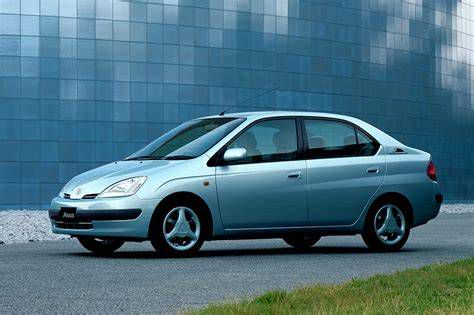
Sales in Japan were extremely strong from the outset, buoyed by the Prius winning Japan’s Car of the Year award for 1998. By May 2000, over 40,000 units had been sold, leading to an increase in production capacity to 3,000 a month in anticipation of its arrival in refreshed form (XW11 chassis) in export markets. The Prius NHW11 was the first Prius sold by Toyota outside of Japan, with sales in limited numbers beginning in the year 2000 in Asia, America, Europe, and Australia. In the United States, the Prius was marketed between the smaller Corolla and the larger Camry, with a published retail price of US$19,995. European sales commenced in September 2000. The official launch in Australia occurred at the October 2001 Sydney Motor Show, though sales were slow until the NHW20 model arrived. The NHW11 Prius was made more powerful partly to satisfy the higher speeds and longer distances driven by Americans, and electric power steering was standard equipment. While it could seat five, its battery pack restricted cargo space. The Prius was offered in the US in three trim packages: Standard, Base, and Touring. Working together, the Toyota Hybrid System allowed a theoretical driving range of 560 miles, propelled the Prius to 62 mph in 13.4 seconds, and achieved a maximum speed of 99 mph. The combined fuel economy was 57.6 mpg, with CO2 emissions of just 114 g/km, quantifiably cleaner and more fuel-efficient than many contemporary saloons. Toyota GB introduced Europe’s first five-year mechanical warranty to allay concerns about battery longevity or reliability in the UK. After more than 123,000 units had been sold worldwide, production of the first-generation Prius ended in August 2003.
Regular Car Reviews: 2010 Toyota Prius
Second Generation: XW20 (2003-2009)
The Prius underwent its first complete redesign for the 2004 US model year, presented at the April 2003 New York International Auto Show. Building on the success of its predecessor, the next-generation Prius (XW20 chassis) was totally redesigned to harness Toyota’s continuing efforts in developing hybrid technology. Launched in the UK on 2 January 2004 with 530 new patents, this advanced successor set new benchmarks, being faster, more powerful, cleaner, and more economical than ever before. It evolved into a compact liftback, sized between the Corolla and the Camry, with redistributed mechanical and interior space significantly increasing rear-seat legroom and luggage room. This larger car adopted a distinctive five-door ‘Kammback’ design, achieving an impressive drag coefficient figure of just Cd 0.26. Beneath its svelte exterior was a lightweight but tremendously strong bodyshell, achieving a five-star Euro NCAP crash test result. This generation also introduced the second-generation hybrid drivetrain, now widely known as Hybrid Synergy Drive (HSD). The purpose of HSD was to redress the balance between the petrol and electric motors, increasing the range and usage of the electric motor to focus on stronger performance rather than merely an ancillary role. The award-winning 1.5-litre NZ-series Atkinson cycle engine was carried over, tuned to offer eight percent more power, while the synchronous AC electric motor was uprated by a huge 50%. Charge for this motor came from an improved battery pack with fewer cells and less weight but greater output density. The second generation Prius contained a 1.31 kWh NiMH battery, composed of 28 modules, each made of six 1.2 V 6.5 Ah Prismatic NiMH cells in series, forming a 7.2 V 6.5 Ah module with 46 Wh/kg energy density and 1.3 kW/kg output power density.
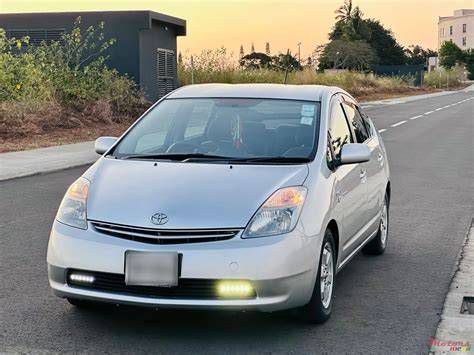
Many innovations were put in place to improve fuel economy, including a new stop-start system for urban emissions, an EV driving mode for exclusive electric motor use up to 1.25 miles, and a world-first electric air conditioning system that could operate when the engine was off. These advances resulted in a 15% improved fuel consumption, now a combined figure of 65.7 mpg, and a 0-62 mph time of 10.9 seconds, with CO2 emissions tumbling to 104 g/km. Toyota also devised a regenerative braking system that captured kinetic energy, feeding electrical energy back into the battery each time the brake pedal was pressed. Before the end of 2004, the second-generation Prius had already surpassed the total sales of its predecessor. By April 2006, total sales had exceeded 500,000 units worldwide, and acceptance of hybrids was boosted by Prius topping JD Power’s customer satisfaction surveys in the UK, France, and Germany. From 2005 to 2009, this generation was also built by FAW Toyota in Changchun for the Chinese market. Although the third-generation Prius was unveiled in January 2009, the second-generation model continued production for the Chinese market until the end of 2011, by which time total Prius sales had climbed to a staggering 1,192,000 units.
Third Generation: XW30 (2009-2015)
Toyota debuted the new third-generation Prius (2010 US model year) at the January 2009 North American International Auto Show, with sales beginning in Japan on 18 May 2009. This generation (XW30 chassis) took the benefits of Toyota’s world-leading hybrid technology to an even higher plane, promising better fuel economy, performance, and reduced lifecycle emissions. On sale in the UK from August 2009, it set new reference points for hybrid vehicles with a system output of 134 bhp (a 22% increase), combined cycle fuel economy of 72.4 mpg (a 10% increase), and CO2 emissions reduced to just 89 g/km (a 14% decrease). These improvements were achieved through a larger 1.8-litre Atkinson cycle petrol engine and a significantly smaller and lighter Hybrid Synergy Drive system, with 90% of its components being new. The third-generation Prius featured a slightly larger body, and the THS engine was increased from 1.5 liters to 1.8 liters. While maintaining the basic "triangle silhouette" of the second-generation, the hood, headlights, and side view possessed greater modulation.
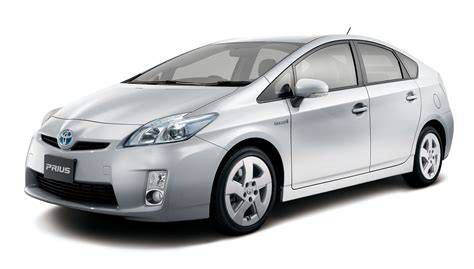
Among its new standard features, Toyota introduced three user-selectable driving modes: EV mode for electric-only low-speed operation, Eco mode for best fuel efficiency, and Power mode for better performance. Its new body design featured a reduced drag coefficient of Cd=0.25, with an underbody rear fin for stabilization at higher speeds. A new front-drive platform underpinned the car, though the wheelbase remained unchanged. Extensive use of high-tensile metal kept weight in check. Numerous high-tech innovations were introduced, including a solar-powered ventilation system that activated an air circulation fan to reduce heat buildup while parked, and electricity consumption was reduced by up to 30% through widespread adoption of LED lights. This generation was also the first car to be constructed using injection moulded eco-plastics derived from plant matter, such as kenaf and ramie. Formal acknowledgement came in the form of it being awarded Japan Car of the Year in 2009 and being shortlisted for 2010 World Car of the Year. In 2011 (for the 2012 model year), the third-generation Prius Liftback received modest style and equipment changes.
The Expanding Prius Family
In 2011, Toyota expanded the Prius family to include the Prius v (also known as the Prius α, and Prius+ in several markets), an MPV, and the Prius c (also known as the Aqua), a subcompact hatchback. The production version of the Prius plug-in hybrid was released in 2012. These new models benefited from more powerful lithium-ion battery packs, a first for Toyota, for different reasons.
Prius Plug-in Hybrid / Prius Prime
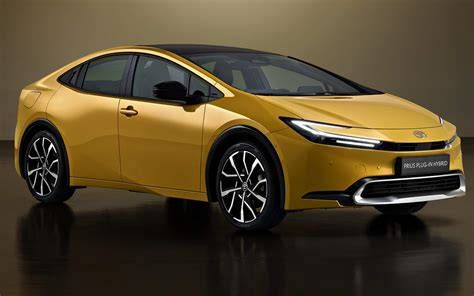
The new Prius Plug-in could be charged from an external power source as well as its hybrid drive system. It was developed to appeal to environmentally conscious early adopters desiring electric motoring benefits without range anxiety. This vehicle's high-voltage battery pack offered an increased range of 14 miles on electric power alone. After a two-year trial leasing to fleets, Toyota introduced the Plug-In version in 2012, featuring a 4.4-kWh lithium-ion battery pack in place of the 1.3-kWh nickel-metal-hydride (NiMH) pack. With up to 15 miles of pure electric range at speeds up to 62 mph, the plug-in could handle neighborhood chores without surrendering any green cred.
Prius v / α / +
In May 2011, Toyota introduced the Prius α (alpha) in Japan, available in a five-seat, two-row model and a seven-seat, three-row model. The latter's third row was enabled by a space-saving lithium-ion drive battery in the center console, while the five-seat model used a NiMH pack. The Alpha formed the basis for the five-seat Prius v, launched in North America in October 2011 with a nickel-metal hydride battery pack. The European version, named Prius+, began deliveries in June 2012, targeting growing European families seeking environmental qualities with additional space and flexibility. US sales of the Prius v ended in 2017.
Prius c / Aqua
Toyota unveiled the Prius c concept at the January 2011 North American International Auto Show. The Prius c, with 'c' representing a "city"-centric vehicle, was designed to appeal to young singles and couples wanting an eco-sensitive, high-mileage, fun-to-drive Prius. Smaller, cheaper, and based on the Yaris, the Prius C was added to the range in 2012. It featured a smaller 1.5-liter engine rated at 73 horsepower and a less powerful electric motor drawing on a smaller battery pack. It still outperformed the original Prius in tests, getting to 60 mph in 10.9 seconds and returning 39 mpg.
Regular Car Reviews: 2010 Toyota Prius
Fourth Generation: XW50 (2015-2022)
The fourth-generation Prius was first shown in September 2015 in Las Vegas and released for retail customers in Japan on 9 December 2015. In August 2013, Toyota Managing Officer Satoshi Ogiso, chief engineer for the Prius line, announced key improvements. This was the first generation of the Prius to use the Toyota New Global Architecture (TNGA) modular platform, providing a lower center of gravity and increased structural rigidity. Ogiso also explained that the next-generation Prius plug-in hybrid, the Prius Prime, was developed in parallel with the standard Prius model. When the new Prius (XW40 chassis) made its world debut at the 2015 Frankfurt Motor Show, its design presented a huge leap forward, but the advancement was even more pronounced under the skin. Its lighter, more compact, and more efficient next-generation full hybrid powertrain was housed within the TNGA platform, promising improved dynamic performance. First customer deliveries for the European market commenced in March 2016, with official homologation figures revealing a combined cycle fuel economy of 94.1 mpg and emissions falling to an historic low of 70 g/km.
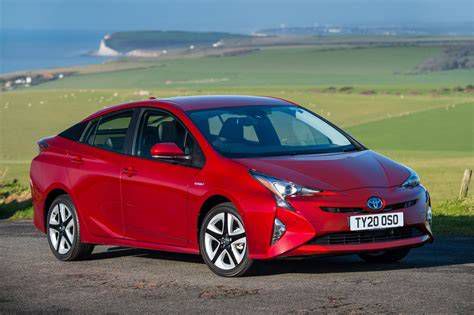
The car’s low-slung stance, made possible by the TNGA platform, and distinctive silhouette were the result of a youthful design team. Slightly longer and wider than the outgoing Prius, the new car was 20mm lower, with careful aerodynamic treatment resulting in a world-class 0.24 coefficient of drag. The new car’s hybrid system was based around a 1.8-litre VVT-i Atkinson cycle petrol engine. While the basic facts were identical to the outgoing Prius, the unit had been completely re-engineered to deliver significantly better fuel economy. The 2017 Prius Prime represented the pinnacle of efficiency and technology for the fourth-generation Prius, with a new dual-motor hybrid powertrain and a remarkable EPA-estimated 133 MPGe (miles per gallon equivalent) rating, the highest in the industry among all vehicles at the time. The US market Prius lineup also introduced an all-wheel drive model featuring Toyota's E-Four system. In 2021, for the 2022 model year, Toyota released the Nightshade Edition in the US, adding black paint to exterior trim pieces.
Fifth Generation: XW60 (2022-Present)
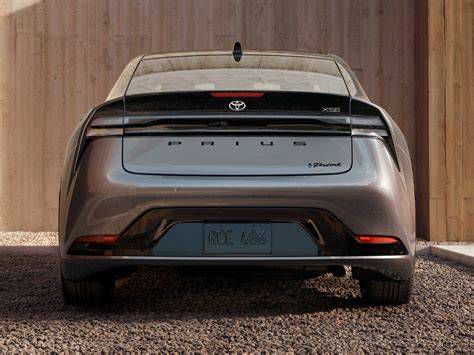
The fifth-generation Prius was presented on 16 November 2022, with two powertrain options announced for the Japanese market. This generation of Prius is available in 1.8-litre (2ZR-FXE) and 2.0-litre (M20A-FXS) variants, which can produce up to 103 kW (138 hp) and 144 or 146 kW (193 or 196 hp), respectively. This model is also available with an E-Four all-wheel drive system. Unlike previous generations, this generation was not sold in Australia due to sluggish sales of the previous generation. In Japan, the Prius went on sale on 10 January 2023. The United States market Prius is available in three trims: LE, XLE, and Limited. The Canadian market Prius is available in two trims: XLE and Limited, both powered with the M20A-FXS engine. Toyota Canada opted to exclusively offer the electronic on-demand all-wheel-drive (E-Four) system across all trims, omitting front-wheel-drive configurations entirely to better suit harsh winter conditions. The Prius was previewed at the 30th Gaikindo Indonesia International Auto Show on 10 August 2023 and launched at the 31st Gaikindo Indonesia International Auto Show on 17 July 2024. The South Korean market Prius went on sale on 13 December 2023, with all variants powered by the M20A-FXS engine. In April 2024, Toyota issued a recall affecting 211,000 2023 and 2024 model year Prius and Prius Prime units worldwide, where the rear doors could open unexpectedly if not locked due to a short circuit on the electronic rear door latches caused by water. For model year 2025, Toyota unveiled the Nightshade edition of the fifth-generation Prius, enhancing the sedan's sleek design with a bold, dark aesthetic, including 19-inch black-finished alloy wheels and black exterior badging.
Key Technologies and Innovations
The Prius operates as a power-split or series-parallel (full) hybrid, sometimes referred to as a combined hybrid, meaning it can be propelled by petrol, electric power, or both. Its design is characterized by a Kammback shape to reduce air resistance, with wind resistance reduced by a drag coefficient of Cd=0.25 (0.29 for the 2000 model). Lower rolling-resistance tyres are used to minimize road friction. An electric water pump eliminates serpentine belts. In the US and Canada, a vacuum flask was used in early generations to store hot coolant when the vehicle was powered off for reuse, reducing warm-up time. The North American second-generation Prius featured electric pumps that warmed the engine by pumping previously saved hot engine coolant from a coolant thermos before the internal combustion engine started. The third generation, however, does not have a coolant thermos, instead heating the engine by recapturing exhaust heat. When the vehicle is turned on with the "Power" button, it is immediately ready to drive with the electric motor.
Regular Car Reviews: 2010 Toyota Prius
A button labeled "EV" maintains Electric Vehicle mode after being powered on and under most low-load conditions at less than 25 mph (40 km/h). This permits driving with low noise and no fuel consumption for journeys under 0.5 miles (0.80 km). Longer journeys are possible as long as the speed is kept below 25 mph (40 km/h), acceleration is kept low, and the battery has enough charge, with the engine starting automatically when the battery runs low. The Prius utilizes two batteries: the high voltage (HV) battery pack, also known as the traction battery, and a 12-volt battery (LV battery). The traction batteries are normally charged between 40% and 60% of maximum capacity to prolong battery life and allow headroom for regenerative braking. Computer-controlled charge controllers and battery management systems keep this battery between 38% and 82% state of charge, typically around 60%. This shallow cycling dramatically improves the cycle life and thermal management. In February 2011, Consumer Reports examined the lifetime and replacement cost of the Prius battery, testing a 2002 Toyota Prius with over 320,000 km (200,000 miles) and finding little difference in performance compared to a new 2001 model. The HVAC system uses an AC induction motor to drive a sealed-system scroll compressor, a design principle that increases efficiency and allows the AC to run while the engine is off.
Global Sales and Market Impact
The Toyota Prius quickly established itself as a global leader in hybrid vehicle sales. Its success was driven by rising environmental awareness and increasing fuel prices.
| Region/Model | Year/Period | Sales Figure | Notes |
|---|---|---|---|
| Japan (First Gen) | May 2000 | > 40,000 units | Sales strong from outset |
| Worldwide (Second Gen) | End of 2004 | > 250,000 units | Surpassed predecessor's total sales |
| Worldwide (Second Gen) | April 2006 | > 500,000 units | Total sales milestone |
| Worldwide (all generations) | End of 2011 | 1,192,000 units | Total Prius sales, as second gen ended production for China |
| Europe (Cumulative) | Mid-2010 | 200,000 units | After 10 years in market |
| Japan (Prius liftback) | 2012 | 317,675 units | Best selling car in Japan for 4th consecutive year |
| Japan (Prius & Prius α) | March 2012 | 45,496 units | Highest monthly sales for any model since 1997 |
| US (Prius Family) | March 2012 | 28,711 units | One-month record for Prius sales ever |
| US (Prius Family) | Q1 2012 | 60,859 units | Best selling quarter ever |
| US (All HEV Prius) | 2012 | 223,905 units | 51% market share of all hybrids sold in US |
| US (Prius PHEV) | 2012 | 12,750 units | 2nd top selling plug-in electric car after Chevrolet Volt |
| US (Prius Family Cumulative) | Mid-October 2013 | 1.5 million units | 50.1% market share of total hybrid sales in US |
| Worldwide (Accumulated) | End of September 2014 | 3,360,400 units | Continued upward trajectory |
Cumulative Prius sales in Europe reached 200,000 units by mid-2010, after 10 years in that market. Rising oil prices caused by the Arab Spring led to increased sales in Q1 2011, but the 2011 Tōhoku earthquake and tsunami led to a production stoppage. Until September 2012, the Prius liftback was the top selling new car in Japan for 16 months in a row. The Prius liftback, with 317,675 units sold in 2012, was the best selling car in Japan during 2012 for the fourth consecutive year. High petrol prices in the US, approaching US$4 a gallon by March 2012, contributed to record monthly sales of Prius family vehicles. A total of 28,711 units were sold in the US during March 2012, becoming the one-month record for Prius sales ever. Another record was set during the Q1 2012, with Prius family sales of 60,859 units, making it the best selling quarter ever. Sales of Toyota Prius family vehicles in California represented 26% of all Prius purchases in the US during 2012. Toyota sold 223,905 Priuses among the various HEV family members in the US in 2012, representing together a market share of 51% of all hybrids sold in the country that year. A total of 12,750 Prius PHEVs were sold in 2012, allowing the plug-in hybrid to rank as the second top selling plug-in electric car in the US after the Chevrolet Volt. Since their inception in 1999, a total of 1.5 million Prius family members had been sold in the US by mid-October 2013, representing a 50.1% market share of total hybrid sales in the country. By the end of September 2010, accumulated Prius sales across the world had exceeded 2,000,000 units, and by the end of September 2014, the figure stood at an incredible 3,360,400 units.