The Renault Espace (French pronunciation: [ʁəno ɛspaːs]) is a series of automobiles manufactured by Renault since 1984. The name "espace" means "space" in French, aptly describing its core concept. The first three generations of the Espace were amongst the first contemporary minivans or MPVs, setting a benchmark in automotive design and functionality. The Renault Grand Espace is a long wheelbase (LWB) version with increased rear leg room and boot size, offering even more practicality.
Origins and Early Development
The Espace concept was originally conceived in the 1970s by the British designer Fergus Pollock, who was working for Chrysler UK, at its design centre at Whitley in Coventry. Matra, spearheaded by Greek designer Antonis Volanis, developed the design for Simca, the then French subsidiary of Chrysler, with the intent of marketing the vehicle as a Talbot. It would replace the Matra Rancho leisure activity vehicle on the Matra production lines.
In 1978, six years before the Espace went into production, Chrysler UK and Simca were sold to the French company PSA Peugeot Citroën, which phased out Simca within a decade because of falling sales. Renault adopted the Matra concept as project J11, which was then given the name "Espace." One restraint was that Renault used longitudinally mounted engines whereas the P23 had been designed with the more efficient transverse layout in mind. The design ended up using the longitudinal layout, which allowed for more flexibility in engine fitment and also made developing a four-wheel-drive version easier. Installing the PRV V6 had been considered from early on but ended up having to wait until the introduction of the second generation. To make the engine installation as short as possible, the radiator was placed to the left in the engine compartment, with the engine reaching the grille. The compact installation necessitated an extended front end for turbodiesel models as this engine was longer; these have a protruding grille and a correspondingly larger front bumper.
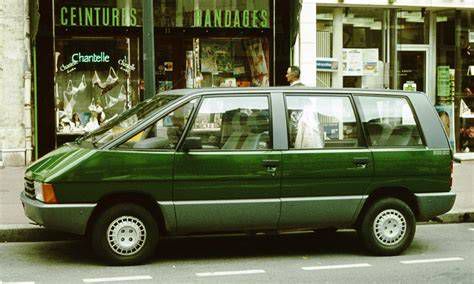
The design featured a body of fibreglass, mounted on a warm-galvanised steel monocoque spaceframe, using the same technique and assembly line at the factory as the Talbot Matra Murena. The Espace was eventually launched by Renault in July 1984. After a slow start, a mere nine Espaces were sold in the first month, consumers realised the benefits of the MPV concept and the Espace became popular. The introduction of the Espace required the relatively small Matra factory to cease production of the Murena to make room for the Espace. It was sold in the United Kingdom from August 1985.
Evolution Through Generations
Second Generation (1991-1996)
Building upon its success, the Espace was revamped in 1988, with most of the remaining Talbot/Simca content being replaced by equivalent Renault parts. A heavily revised Espace was launched in January 1991, adopting the Renault family look, to replace the Talbot themed styling of the original. This was essentially a reskin of the original car, with a new dashboard and other interior improvements. The chassis was left unchanged. Matra's facilities still limited production and deliveries were highly allocated during the first few years. New was the option of a V6 engine, the company's 2,849-cc PRV V6 with 153 PS (113 kW). The second generation saw mostly minor changes during its lifespan. A four-speed automatic option was added to the V6. In 1995 a version of the turbodiesel with a variable vane turbocharger was added to the lineup; thanks to this, power increased from 88 to 92 PS (65 to 68 kW). Production ceased in October 1996, after 316,419 examples had been built.
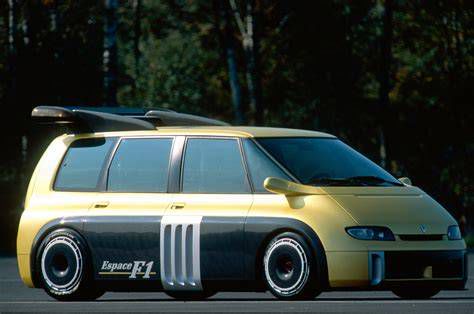
A high performance prototype (P46) called the Espace Biturbo Quadra was also proposed by Matra in 1990, before the second generation Espace entered production. However, it never entered production due to the concern of its stability, and only a single prototype remains today. In 1995, Renault displayed a show car called the Espace F1, which was created by Matra to celebrate both the tenth anniversary of the Espace and Renault's involvement in Formula One racing. The vehicle used a lightweight carbon fibre F1 style chassis in combination with a carbon fibre reinforced Espace J63 series body (as opposed to fibreglass on the standard model).
Third Generation (1996-2002)
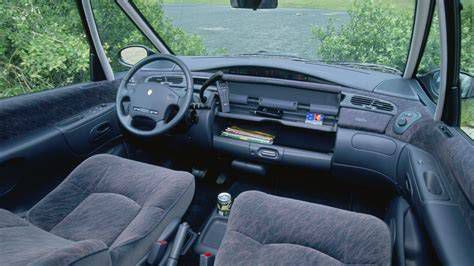
The third generation Espace arrived in December 1996, with the long wheelbase Grand Espace coming to market in the beginning of 1998. The most notable feature of the Espace III was the radically futuristic interior, including an elongated and centrally mounted dashboard, digital speedometer and radio/CD display. Once again, the Espace III featured a plastic (GRP) body over a galvanised independent steel chassis. In November 1999, a smaller, 1.9-litre turbodiesel had been added to the lineup. The Espace III shared much of its running gear with the Laguna of the same era. The third generation Espace was the last Espace to be built by Matra (the short lived Avantime was subsequently produced on the same production line).
Fourth Generation (2002-2014)
The fourth generation Espace arrived in November 2002, being the first entirely Renault developed and produced model. This model is 90% recyclable, and contains numerous weight reducing materials, thus cutting fuel consumption. In 2002, Renault goals were to deliver 450,000 units of the Espace IV before 2009, which would account for 20% of the European market for an MPV.
On 22 June 2012, Renault announced a restyling of the Espace (Phase IV), the second important after 2006, incorporating the "family feeling" design concept of Laurens van den Acker. The 2003 Espace featured in British motoring television show Fifth Gear twice, once when it was crashed into a J63 Espace, and again when it was crashed into a 1990s Land Rover Discovery, both at 64 km/h (40 mph).
Expert reviews praised the Espace IV:
- The AA: 'The [Espace] is the MPV to beat all MPVs; it's spacious, luxurious and drives well for a car this size.'
- Autocar: 'The interior is well executed, but even the Grand Espace isn't that spacious with seven on board.'
- Auto Express: 'The restyle hasn't dented the visual appeal of the Espace.'
- Top Gear: 'The last word in MPVs, the Renault Espace is simply vast, but manages to be stylish and unconventional at the same time.'
- What Car?: 'Decent space for people, if not their luggage.'
Fifth Generation (2014-Present)
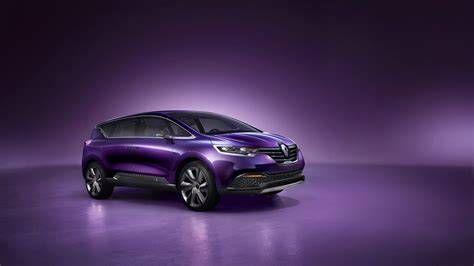
The fifth-generation Espace was unveiled at the 2014 Paris Motor Show in October 2014. This generation was preceded by the Initiale Paris concept car, which is similar to the production version. The concept was unveiled in September 2013 at the Frankfurt Motor Show. In June 2017, the 1.6-liter petrol engine was replaced by the larger 1.8 TCe. An updated Renault Espace was commercialized from Summer 2020. This update comprises a new interior, additions to assisted driving options, an updated EasyLink infotainment system and a new dashboard. The petrol-engined models were taken out of production in October 2020, leaving only two-liter diesels. The Espace received a facelift in March 2025. Upgrades included a new front end inspired by the Renault Rafale. It also received a new hood and tailgate as well as new rear lights. Renault Espace is still being produced and is currently in its fifth generation.
Owners are quite satisfied with how spacious, practical, and comfortable the Renault Espace is. Renault Espace classifies as a luxury crossover multi purpose vehicle.
Renault Espace discussed by car designer - past, present and future! | Niels van Roij Design
Technical Specifications and Key Features
The Renault Espace series has consistently focused on providing ample interior room and versatile configurations. Historically, seating has been a consistent feature across most models.
Here's a look at some general specifications:
- Seating Capacity: Renault Espace generations one to four consist only of 7-seat vehicles. 5-seat options, however, are included in the fifth generation range.
- Long Wheelbase Version: Renault Grand Espace is the long wheelbase version of the model, measuring between 4787 mm (188.46 in.) and 4861 mm (191.38 in.) in length, depending on the modification.
Ground clearance has varied across the generations, adapting to evolving design philosophies and market demands:
| Generation/Model Year | Ground Clearance |
|---|---|
| First generation variants | 150 mm (5.9 in.) |
| Second generation | 119 mm (4.7 in.) |
| Up to 2002 model year | 109 mm (4.3 in.) |
| More recent vehicles | 160 mm (6.3 in.) |
From its initial innovative fibreglass body on a steel spaceframe to its modern recyclable materials and advanced infotainment systems, the Espace has always aimed to push boundaries in vehicle design and efficiency. The latest updates, such as the new EasyLink infotainment system and advanced assisted driving options, further enhance its appeal as a luxury crossover MPV.