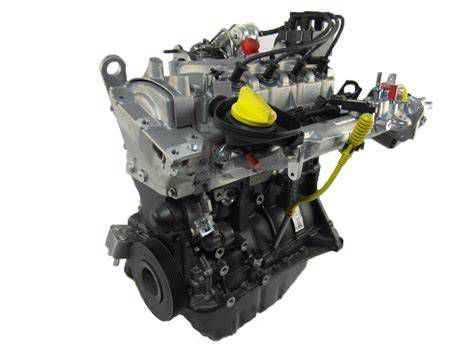
The D7F engine family from Renault represents a series of compact, naturally aspirated petrol units primarily used in the company's small city cars. Specifically, the engine code D7F 730 is associated with the 1.1-litre (or 1.2-litre in some designations) variant used in the first-generation Renault Clio. These are compact city cars sold across European markets under various trim designations throughout the 1990s. The D7F engine family was a core Renault unit for small petrol applications during this period, and the 730 variant is the configuration associated with this generation of the Clio.
The 1.2-liter 8-valve Renault D7F engine was produced by the concern from 1996 to 2014 and was installed on the company’s most compact models such as Twingo, Clio or Kangoo. In 1996, Renault engineers introduced a compact engine designed for the Twingo model. Despite its small size, this engine had an in-line cast-iron 4-cylinder block, an 8-valve cylinder head without hydraulic lifters, a single ignition coil and a timing belt drive.
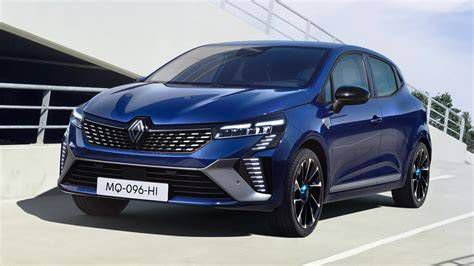
General Technical Data
The Renault D7F engine is an Otto cycle, in-line engine designed for front-engine installation. These technical details are useful when checking whether a replacement D7F 730 engine matches the original unit fitted to the vehicle. Always use the stamped engine code on the block as the final confirmation before ordering a replacement engine.
Engine Design and Configuration
- Engine type: D7F (specific variants include D7F 730, D7F A8)
- Functional principle: Otto
- Design: In-line engine
- Installation position: Front engine
- Displacement: 1.1 liters (1149 cc)
- Number of cylinders: 4
- Valves: 8V
- Valves per cylinder: 2
- Mixture formation: Injection
- Operating materials: Super (petrol)
- Gearbox options: Manual gearbox
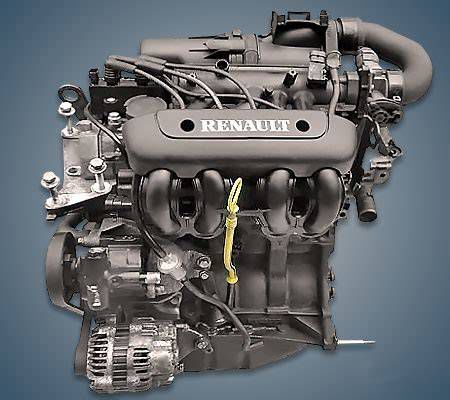
Performance Characteristics
Output for this specific variant is between 40 kilowatts (kW) and 43 kW, equivalent to 54 horsepower (hp) to 58 hp, depending on application. The first power units with indices 700 and 701 developed 58 hp and 93 Nm of torque, and after the update in 2001, the engines 702, 703 and 704 slightly increased power to 60 hp.
- Power: 58 hp (43 kW) - up to 60 hp (44 kW) depending on variant and year
- Torque: 93 Nm (at 2500 rpm)
Applications and Production Lifecycle
The D7F engine family was widely used across various Renault compact models. The D7F was first produced in July 1996. The D7F A8 engine, a particular variant, has largely been installed in Microcar models since 2007. It is a 1.1-liters-in-line engine with 4 cylinders that is used in various models of Renault. The 58 PS variant was first installed in the Renault Twingo 1.2 Authentique Schrägheck in conjunction with a Manual gearbox. The most powerful version of the engine to date, with 58 PS and 93 Nm, was last installed in 2008 in Renault Twingo 1.2 60 Authentique Hatchback. The D7F A8 engine is used exclusively in vehicle type Hatchback. This engine meets the environmental standard Euro 4.
Key Vehicle Models
The D7F engine was installed by Renault during its construction period, which broadly spanned from 1996 to 2014, with specific variants like the D7F A8 being produced from 2007 to 2010.
| Model Designation | Construction Period | Power | Gearbox | Fuel | HSN/TSN |
|---|---|---|---|---|---|
| Renault Twingo 1.2 Authentique (N) | 2007/09 - 2008/01 | 43 kW (58 hp) | 5-speed Manual gearbox | Super | 3333/APM |
| Renault Twingo 1.2 Expression (N) | 2007/09 - 2010/04 | 43 kW (58 hp) | 5-speed Manual gearbox | Super | 3333/APM |
| Renault Twingo 1.2 60 Authentique (N) | 2008/01 - 2010/10 | 43 kW (58 hp) | 5-speed Manual gearbox | Super | 3333/APM |
Maintenance and Longevity
The D7F engine utilizes a timing belt drive. The manuals indicate the procedure for replacing the belt every 120,000 km, but if it bursts earlier, the valves in the engine will bend.
Replacement Engine Market
Based on known offers, a replacement motor of type D7F A8 costs on average €646 in good condition. A new or reconditioned engine can cost up to €1,317. The vehicle allocation is based on our own research and supplier information and may be incorrect. Please check the accuracy of fit yourself. We as a platform assume no liability for accuracy or availability.
Current Market Offers for D7F A8 Engines (Example)
Data from 28.06.2026 15:46, prices exclude shipping costs and are subject to change.
- €503.00 (43 kW / 58 hp), Provider: ebay.com, Autodemolizione Vignaga srl Italy
- €1,316.66, Provider: ebay.com, NERYUS S. R. L. Italy, Bedizzole
- €499.99 (Year built: 2009), Provider: ebay.com, DAVIDE MILANI Italy, Annicco
- €462.00 (Condition: Used, 120,000 km, Year built: 2007), Provider: ebay.com, F. I. R. S. A. S. DI F. I. R. SERVIZI S. R. L. SOCIETA' BENE Italy, Trambileno
- €743.00 (Year built: 2007), Provider: ebay.com, CARS S. R. L Italy, Vajont
Evolution: From D7F to D4F and TCe
The D7F engine was succeeded by the D4F in December 2000. It was the same displacement but added 16-valve SOHC heads for 75 PS (55 kW; 74 hp) at 5500 rpm and 105 N⋅m (77 lb⋅ft) at 3500 rpm (D4F-702, D4F-712). The timing drive type and valvetrain layout are particularly useful when comparing this engine with the later D4F, which shares the same displacement but uses a 16-valve cylinder head. In 1997, new European pollution regulations went into effect, influencing engine development.
The D4F was revised in 2004 (D4F-722) to receive better intake design with much larger air filter extending torque range from 3500rpm to 4250 rpm. The D4F-740 variant received changes to camshaft and valve lifters to allow lower idle at 650 rpm and shorter 1st and 2nd gear to help with extra weight of new Clio III introduced in 2005.
In an effort to produce a cost-effective fuel efficient engine, Renault introduced a turbocharged version of the D4F, the D4FT, in 2007. Renault created the break by suggesting downsizing on petrol engines, with the range of TCe engines (Turbo Control efficiency). The TCe engine - TCe 100, is known as a good 100 bhp (75 kW; 101 PS) petrol engine due to its driving pleasure and moderate fuel consumption thanks to high and instant low/midrange torque rather than high power near redline.
Renault Clio 172/182, The Definitive Guide To Fault Finding And Fixing A Miss Firing F4R Engine.
The TCe petrol engine (Turbo Control efficiency) offers the power output of a 1.4 L engine, the torque of a 1.6 L engine and the fuel consumption almost of a 1.2 L engine. It is responsive from low revs, flexible and has power in reserve while displaying the lowest fuel consumption figures for a 100 bhp (75 kW; 101 PS) petrol engine. These unique qualities are obtained thanks to the combination of a 1.2 L capacity engine with a low inertia low boost pressure turbocharger whose response time is reduced to the minimum, through the use of a turbine and a small diameter compressor.