Most UK businesses need expensive assets to produce the goods and services they sell. These assets are typically cars, vans, plant and machinery. Without them, many businesses simply cannot function. However, buying big-ticket items can create problems with cashflow and for companies with seasonal finances, spending a large sum all at once may be impossible. Say hello to the operating lease - the low-cost way for businesses to secure the major tools they need. Why spend more to buy when you can pay less to rent?
Operating leases offer a fast, flexible and affordable solution. Give your business what it requires without creating a financial crunch. No matter if your business is a limited company, PLC, partnership, or sole trader, there’s an operating lease for you.

How Operating Leases Work
An operating lease is a low-cost way for businesses to obtain the big-ticket items they need. Unlike purchase loans, the lessee (you) does not buy the asset; you rent it and you cannot purchase the asset at the end of the contract. In most cases (especially with business vehicles), the agreement will include a residual value that is based on the period of the lease and the estimated value of the asset at the end of the contract.
At the end of the agreement the asset is usually sold to a third party on behalf of the finance company. If the asset sells for more than the residual value, the finance company will refund a percentage of the surplus back to you. If the asset sells for less than the residual value, you will be liable to make a further payment to the finance company.
An operating lease allows businesses to use the asset for a lower monthly cost than buying the asset with hire purchase. Operating leases may come with included maintenance and repairs. In most cases (except for company cars), businesses may reclaim up to 100% of the VAT element of the monthly cost - including any maintenance or service charges.
Operating vs Capital Lease
What are Operating Leases Used For?
Operating leases may be used to secure the use of a wide range of expensive business assets - including vehicles, plant, and machinery.
Accounting for an Operating Lease
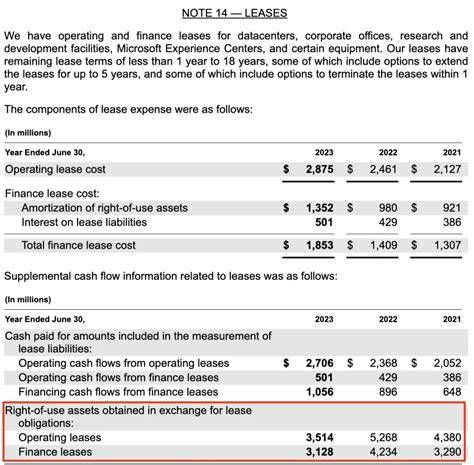
Understanding the difference between financial lease and operating lease is essential for businesses dealing with leased assets. To distinguish between financial lease and operating lease, note that operating leases are generally cancellable before term ends, providing businesses with flexibility unlike rigid finance leases.
IFRS 16 (UK Accounting Rule)
IFRS 16 is a UK accounting rule designed to report information that faithfully represents lease transactions and provides a basis for users of financial statements to assess the amount, timing and uncertainty of cash flows arising from leases. To meet that objective, a lessee’s commitment disclosure should recognise assets and liabilities arising from an operating lease as follows:
- Operating leases are shown as an asset on the balance sheet, valued as the present value of the lease payments (not the market value of the asset).
- The lease liability is shown on the balance sheet (similarly, the present value of the lease payments).
- The income statement shows an expense of the cash payment to the lessor within operational expenses.
- No interest expense or depreciation is shown in the income statement.
Depending on the type of asset being leased (car, van, machinery, etc), the lessor may be able to claim up to 100% of the value of the lease payments as a tax deduction. An operating lease is recorded on the balance sheet as an asset and the monthly rental payments are treated as operational expenses, not debt.
ASC 842 (US Accounting Standard)
ASC 842 requires leases to be presented on both the balance sheet and income statement, regardless of whether they are classified as operating or finance leases. For operating leases in particular, this means recognizing a right-of-use (ROU) asset and a corresponding lease liability at lease commencement. One area that remains unchanged under ASC 842 is the effect of operating leases on the income statement.
Under ASC 842, the tenant calculates the ROU asset and lease liability based on the present value of remaining lease payments as of the possession date of the lease. The initial journal entry under ASC 842 records the asset and liability on the balance sheet as of the lease commencement date.
Recording operating lease transactions is simple and supports clear financial reporting. Payments under an operating lease are recorded as an expense in the profit and loss account. When payments are made, cash or bank is credited, and lease expense is debited. These entries for operating leases are straightforward, providing transparency in expense reporting.
An Example of an Operating Lease
ABC Plumbers need a new van for their business. Instead of paying cash or opting for a hire-purchase agreement that comes with higher monthly payments, they secure the van with an operating lease. It works like this:
- The van costs £20,000.
- The lessor (lender) offers to lease the van to ABC (the lessee) for £350 per month, including service costs, and for 48 months.
- The Residual Value is set at £4,000.
- ABC pays one month deposit of £350 and drive their new vehicle away.
- Over 4 years, they pay a total of £16,800 for use of the van.
- At the end of the contract, the vehicle is sold for £5,500 - £1,500 more than the agreed Residual Value.
- The lessor passes 95% of £1,500 back to ABC. They receive £1,425 which they use to lease a new vehicle and put the surplus cash back into their business.
The Pros and Cons of Operating Leases
Selecting the right lease structure can significantly affect a company’s financial health and operational flexibility.
Pros
- The business may obtain a newer asset than if they were to buy it.
- Spreads the cost over time and at a fixed monthly price which will not go up even if bank interest rates rise.
- Allows a business to use an asset at a lower monthly cost than if they were to buy it with a hire purchase agreement.
- Low deposit - usually equal to the first month’s lease payment.
- Leasing costs on certain assets - such as business vans - are 100% tax deductible and allow the business to reclaim the VAT.
- Depending on the leased asset, the agreement may include maintenance and repairs.
Cons
- The asset returns to the lessor (lender) at the end of the contract period.
- May include a high Residual Value that could see the lessee paying more at the end of the contract.
- May include usage limitations - such as a mileage cap - that could cause the lessee to pay more at the end of the contract.
- The lessor owns the asset. If the lessee defaults on payment, the asset returns to the lessor.
Operating Lease vs. Other Lease Types
Leasing has become a preferred avenue for companies to acquire assets without major upfront capital outlays. But choosing between a finance lease and an operating lease isn’t always easy. The differences between an operating lease and a finance lease are extensive, encompassing aspects such as asset life coverage, treatment in financial books, payment structures, risk exposure, and tax implications.
Finance Lease vs. Operating Lease
Prior to discussing the differences between an operating lease and a finance lease, it’s essential to understand the distinction between a lessee and a lessor. A finance lease, often referred to as a capital lease, entails a long-term agreement where the lessee essentially assumes the risks and rewards associated with ownership, mirroring the characteristics of a purchase. In simpler terms, it’s a lease that effectively transfers the asset’s ownership rights to the user by the end of the lease term. For instance, Ayush owns a car, and Suresh wants to lease it for 5 years through a finance agreement. At the end of the 5-year lease, Suresh can make a final balloon payment to Ayush to obtain ownership of the car.
In contrast to a finance lease, an operating lease is a shorter-term arrangement wherein the owner retains the asset’s ownership throughout the lease period. Let’s say Mukesh is opening a new store in Mumbai. He enters a 3-year rental agreement for shop space with a local builder. Mukesh only gains the right to use the retail space by paying rentals. The shop space will never become an asset in Mukesh’s books. He records monthly rental expense on his income statement.
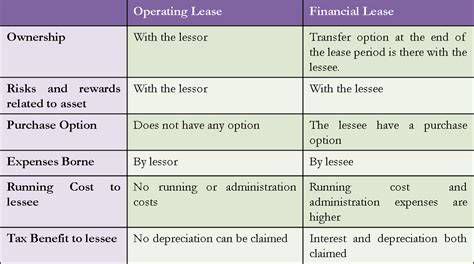
Under a finance lease, the risks and rewards of asset ownership are effectively transferred to the lessee, making it similar to acquiring the asset outright through a loan. Under an operating lease the risks and rewards of ownership are borne by the lessor and your participation is primarily one of usage of the vehicle.
A finance lease is a long-term rental agreement with an option to buy the asset at the end of the contract. An operating lease is also a long-term rental agreement, but there is no option for the lessee to buy the asset. Operating leases typically have lower monthly costs and may require a smaller deposit than a finance lease. They will also usually include maintenance and repairs, and the lessee may be liable to residual payments at the end of the contract.
Key Differences in Detail:
- Ownership: The first difference is that of ownership. With a finance lease, the asset, in this case, the vehicle, becomes the lessee’s responsibility and risk at the end of the lease term. In an operating lease, ownership of the asset usually stays with the lessor.
- Bargain Purchase: A finance lease has a bargain purchase option that enables the lessee to buy the vehicle at less than market value. An operating lease provides no option to buy the asset.
- Duration/Term: With a finance lease, the lease term equals or exceeds the estimated useful life of the vehicle.
- Current Value: With a finance lease, the value of the lease payments equals or is higher than 90% of the cost of the equipment.
- Risks: With a lease, the lessee pays for the maintenance, insurance, and taxes. Operating leases typically include maintenance and repairs.
- Tax: With a finance lease, the lessee is the owner of the equipment. He is responsible for interest and depreciation expenses. For tax efficiency, an operating lease provides better deductions as lease payments are fully recognised as business expenses.
Under IFRS, a finance lease is recognised on the balance sheet as both an asset and a liability, reflecting the right to use the asset and the obligation to make lease payments. The leased asset is depreciated over its useful life, while interest expense is recorded separately. This approach provides transparency and allows businesses to accurately present their financial position. On the other hand, operating leases under IFRS are treated off-balance sheet (before IFRS 16), with lease payments recognised as an expense over the lease term.
Choosing between a finance lease and an operating lease requires careful evaluation of cash flow, asset control, and compliance with accounting standards. Navigating the tax aspects of leasing can significantly influence business decisions.
Table: Comparison of Operating Lease vs. Finance Lease
| Feature | Operating Lease | Finance Lease (Capital Lease) |
|---|---|---|
| Ownership & Risks | Lessor retains ownership; risks/rewards borne by lessor. Lessee cannot purchase asset. | Ownership transfers or option to buy; risks/rewards transfer to lessee. |
| Balance Sheet (IFRS 16 / ASC 842) | Recognised as Right-of-Use (ROU) asset and lease liability. Payments as operational expenses. | Recognised as both an asset and a liability. |
| Income Statement | Expense of cash payment (operational expenses). No separate interest or depreciation. | Depreciation and interest expense recorded separately. |
| Tax Implications | Lease payments (operational expenses) often 100% tax deductible. | Lessee claims depreciation and interest expense deductions; interest component is a business expense. |
| Monthly Cost | Typically lower monthly costs. | Often higher monthly payments (closer to purchasing outright). |
| Deposit | Usually smaller deposit. | May require a larger deposit. |
| Maintenance/Repairs | Often included in the agreement. | Lessee typically responsible for maintenance, insurance, and taxes. |
| Residual Value | Lessee may be liable for residual payments or receive surplus. | No residual value liability for the lessee. |
| Term | Shorter-term arrangement; typically does not cover major part of economic life. | Long-term agreement, often equals or exceeds estimated useful life. |
| Purchase Option | No option to buy the asset. | Option to buy the asset at the end of the contract (often a bargain purchase). |
Complex lease terms mean that it is often difficult to determine how they should be classified. Leases are classified currently under IAS 17, Leases, as finance or operating leases at inception, depending on whether substantially all the risks and rewards of ownership transfer to the lessee. If the changes would have resulted in a different lease classification, had they been applied originally, then the revised lease agreement is treated as a new lease over the remaining lease term.
Leases of specialised assets will usually be structured as finance leases. If an asset is specialised, then this implies that no other entity has a use for the asset. Consequently the lessor will only achieve its return on investment through the lease payments and it will structure the lease as a finance lease accordingly. However, in the case of a specialised asset this will not normally occur, because it is of value only to the lessee.
Where an asset is leased and rents are nominal rents, the agreement is still a lease under IAS 17. The total value of the rents will fall short of the fair value of the asset, thus indicating an operating lease. Often, the rents are low because a premium will have been paid up-front which may be equivalent to substantially all of the fair value of the asset. In this case, the lease is probably a finance lease.
The presence of an option to extend the lease at substantially less than a market rent implies that the lessor expects to achieve its return on investment solely through the lease payments and therefore is content to continue the lease for a secondary period at a nominal rental. This is an indicator of a finance lease. An option to extend it at a market rental may indicate that the lessor has not achieved its return on investment through the lease rentals and therefore is relying on a subsequent lease or sale to do so. This is an indicator of an operating lease as there will be no compelling commercial reason why the lessee should extend the agreement.
If the lease also requires the lessee to make good to the lessor any shortfall between the sale proceeds and a fixed ‘residual’ amount, then again this is evidence of the lessor’s return being fixed, providing evidence of a finance lease. A contingent rent is such amount that is paid as part of lease payments but is not fixed or agreed in advance at the inception of lease rather the amount to be paid is dependent on some future event.
If a lease contains a clean break clause, where the lessee is free to walk away from the lease agreement after a certain time without penalty, then the lease term for accounting purposes will normally be the period between the commencement of the lease and the earliest point at which the break option is exercisable by the lessee. If a lease contains an early termination clause that requires the lessee to make a termination payment to compensate the lessor such that the recovery of the lessor’s remaining investment in the lease was assured, then the termination clause would normally be disregarded in determining the lease term.
Capital Lease vs. Operating Lease
Both are long-term rental agreements, but they come with significant differences. A capital lease is similar to a finance lease, except that a capital lease is recognised as a form of purchase for tax purposes and the leased asset must be recorded on the balance sheet as a taxable item. Capital leases may give the lessee the option to buy the asset at the end of the contract. Operating leases provide no option to buy the asset, and typically have lower monthly costs and may require a smaller deposit than a capital lease.
Hire Purchase vs. Operating Lease
A hire purchase agreement lets the buyer purchase the asset over time, with the value of the asset repaid in equal instalments. The buyer always owns the asset when the contract ends. An operating lease is a long-term rental agreement that offers no path for the lessee to buy the asset at contract end. Operating leases typically have lower monthly costs and may require a smaller deposit than an HP agreement.
How a Broker Can Help
Finding the best operating lease for your business can be a complicated task, with a myriad of different rules, lease options, and tax considerations to navigate. Business owners seeking this type of funding may find themselves forever searching and making applications to lender after lender. Instead, working with a broker, who can access operating leases from a wide range of lenders is a better way to go.