On August 29, 2007, Ford achieved a significant production milestone with the introduction of an advanced active suspension system on the new Ford Mondeo. This innovative system, known as Interactive Vehicle Dynamic Control (IVDC), was initially offered as a UKP650 option in the UK. It was designed to provide a comfortable ride while simultaneously enhancing sportiness and safety, effectively addressing the traditional trade-off between ride comfort and handling characteristics in conventional suspension setups.
Understanding Interactive Vehicle Dynamic Control (IVDC)
The IVDC system in the Ford Mondeo offers near constant suspension adjustment to perfectly match the desired ride with prevailing road conditions and the driver's specific driving style. It is a sophisticated solution that provides rapid, imperceptible adjustments in line with the car's behaviour and current road conditions.
Driver-Selectable Modes and Adaptive Response
The IVDC system offers "hard" or "soft" modes for the front and rear shock absorbers, allowing drivers to choose between distinct settings:
- Sports Mode: This firmer setting is designed to optimise the car's responses, particularly on twisty B-roads, providing enhanced agility and control.
- Comfort Mode: Tailored for relaxing long-distance motorway journeys, this mode prioritises ride comfort and smoothness.
- Normal (or Regular) Mode: This setting offers a balanced performance suitable for everyday driving conditions.
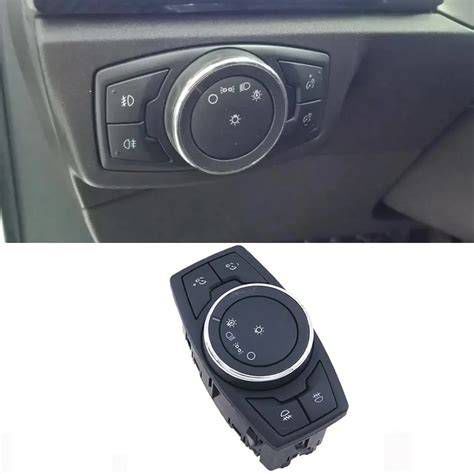
Using a switch located next to the handbrake lever, drivers can easily select their preferred "sport" or "normal" mode. Once a choice is made, the active suspension technology adjusts the car's dampers more than 10 times a second. This continuous adjustment matches the driver's selection with road conditions and the demands being made by the driver in terms of acceleration, braking, and cornering speed, providing more precise responses than the fixed settings of a conventional suspension system.
How the IVDC System Works
The adaptive suspension system is meticulously controlled by a dedicated computer, typically installed in the luggage compartment behind the rear seats. This computer has a self-diagnosis function, ensuring reliable operation.
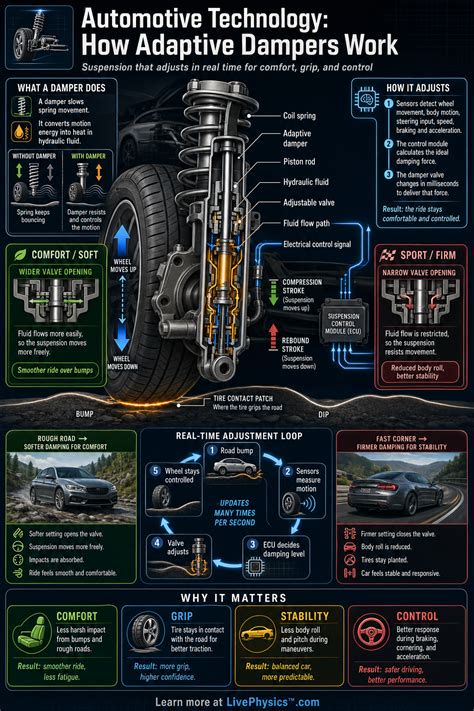
The responses of IVDC are based on inputs from seven sensors:
- One sensor acting on each wheel.
- Three additional sensors positioned to measure acceleration, pitch, and roll of the vehicle.
Information from these sensors is continuously fed into a control unit. This unit then triggers electronic valves located in each damper. These electromagnetic valves are key to the system's adaptability:
- When a valve is open, the fluid flows through a bypass circuit inside the shock absorber, resulting in a softer suspension mode.
- When a valve is closed, the shock absorber becomes harder, providing a firmer ride.
The system is also reactive to the car's speed; at high speeds, the shock absorber automatically becomes harder, further enhancing stability and control. The entire system has been precisely tuned to match the specific weights and tracking characteristics of the Ford Mondeo.
CNET On Cars - Car Tech 101: Understanding adaptive suspension
Benefits of Adaptive Suspension
Ford vehicle dynamics manager Norbert Kessing highlighted the significant advantages of the IVDC system, stating: “New Mondeo's ability to monitor its handling interactively with the driver improves safety and comfort. An active suspension system makes particular sense in larger cars like the new Mondeo. It enhances dynamic stability, particularly under critical driving conditions, and works with the car's other safety systems to reduce braking distances by up to 10 per cent on rough roads.” By being able to react within one tenth of a second, the system can even avoid the need for the Electronic Stability Programme (ESP) to be activated, demonstrating its proactive safety capabilities.
While the adaptive suspension was introduced as an option, its availability and standard inclusion can vary. For instance, while it was an option in the UK, it was found to be standard on Titanium models in Ford Australia, indicating its recognition as a premium feature.
Ford Mondeo Suspension Overview (2007-2014 Models)
The Ford Mondeo, particularly the fourth incarnation produced from 2007 to 2014, was renowned for its handling and load-carrying capabilities. These models were equipped with sophisticated suspension systems, with the adaptive IVDC system building upon these strong foundations. The various suspension components work in unison to ensure safe handling and comfort for all occupants and cargo.
Front Suspension
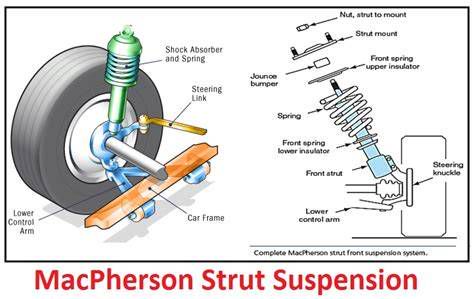
The front suspension is independent, featuring MacPherson struts. These struts contain coil springs with telescopic shock absorbers installed inside them, complemented by an anti-roll bar. The lower ends of the struts are connected to the steering knuckles, which in turn are connected to the lower suspension arms with ball joints. The anti-roll bar is secured with bolts to the rear of the subframe and connected to the suspension struts with connecting links.
Rear Suspension Types
The Ford Mondeo offered different rear suspension configurations depending on the body style:
- Sedan and Hatchback Models: These are equipped with a rear independent suspension of the "Quadra-link" type, featuring four support points on each side of the car. Its two lower arms (on each side) are connected with their outer ends to the support of the rear axle of the suspension, and with their inner ends to the beam. A reaction arm (on each side), fixed to the lower part of the knuckle and the floor, effectively absorbs the forces that arise during braking and acceleration.
- Station Wagon Models: Station wagon models utilise a rear independent "SLA" (short-long arm) type suspension. This design provides a larger luggage compartment area as there are no suspension parts protruding into it. This suspension has three transverse levers on each side: an upper forged arm and two lower stamped arms. A reaction arm on each side supports the rear axle support of the suspension. Distinctively, the coil springs are installed separately from the shock absorbers in this configuration.
All Mondeo models are equipped with an anti-roll bar. While SI models feature gas-filled front and rear shock absorbers, other models typically use hydraulic shock absorbers. The IVDC system replaces or modifies these standard shock absorbers with electronically controlled units.
Maintenance of Ford Mondeo Suspension Components
The many suspension bushes, bearings, and joints that constitute the Mondeo’s suspension system are crucial for safe handling and comfort. Over time, these components can become worn or damaged, eventually losing their effectiveness. Such wear can often be felt, seen, or heard by the driver.
Common Wear Items and Replacement
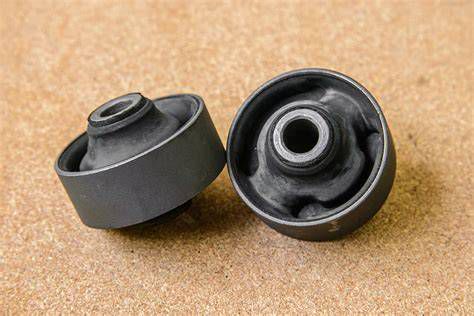
Rear trailing arm bushes are a common component of this system that can deteriorate over time. Fortunately, these bushes can often be replaced separately, which can save the cost of replacing the entire trailing arm assembly. This individual replacement is imperative for the correct operation of the bushes. Modern replacement bushes, such as those from febi, often feature an outer metal casing with a leading edge for ease of fitment.
Overcoming Challenges with Fasteners
One of the most significant challenges when repairing a vehicle’s suspension system is removing corroded bolts or fixings that secure worn parts. These fasteners, being located on the underside of the vehicle, are constantly exposed to water, dirt, and other elements, leading to rust and weakening over time.
To overcome stubborn fasteners, several methods may be required:
- Penetrating Oil: Lubricating rusted bolts or nuts with penetrating oil can significantly aid in loosening them.
- Wire Brush: Cleaning the threads with a wire brush before attempting to loosen them can also be beneficial.
- Hammer and Punch: Gently tapping or loosening a nut with a hammer and punch can sometimes help break the corrosion bond. Care must be taken not to damage the threads.
- Heat Application: In some cases, carefully heating the nut or bolt and the surrounding parts with a soldering iron can help loosen them. However, this method carries a risk of fire and should be approached with extreme caution.
- Leverage: Using rods and pipes as levers can provide additional torque to stubborn fasteners.
Many suspension and steering operations require raising the vehicle and placing it securely on supports. It is always recommended to use a mobile hydraulic jack instead of the standard jack from the toolkit for stability. Warning: Never work under a vehicle supported only by a jack.
Importance of Quality Replacement Parts
The process of removing corroded fasteners often renders the original bolts unfit for reuse, a detail that is sometimes overlooked during repairs. High-quality repair kits, such as those offered by febi (e.g., axle beam mounting kit 43403), provide a comprehensive solution. These kits often include new bushes for both sides of the vehicle, as well as new bolts. The included bolts typically boast high tensile strength, essential for securing safety-critical components, along with excellent clamping force and an anti-corrosion coating for an extended service life.
| Suspension Component | Common Issues | Maintenance Tip |
|---|---|---|
| Adaptive Dampers (IVDC) | Electronic valve malfunction, sensor failure, fluid leaks | Regular diagnostic checks (self-diagnosis function), visual inspection for leaks |
| Bushes and Joints | Wear, cracking, perishing, excessive play | Regular inspection for deterioration, prompt replacement (e.g., trailing arm bushes) |
| Shock Absorbers (Conventional) | Loss of damping, leaks, noise | Visual inspection for leaks, bounce test, replacement if worn |
| Coil Springs | Breakage, sagging | Visual inspection for cracks or signs of fatigue |
| Anti-Roll Bar Links | Wear, knocking noises | Check for excessive play in joints |
| Fasteners (Bolts/Nuts) | Corrosion, seizing | Use penetrating oil, clean threads, replace with high-quality, coated bolts during repairs |