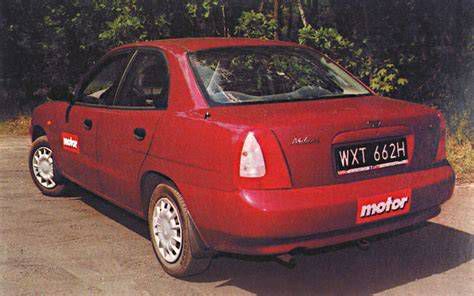
The Nubira arrived in 1997 and was a huge improvement over the cars that went before it. Daewoo was not prepared to be cheap-and-cheerful forever; it had ambitions beyond the bottom end of the market, and subsequent models, like the Nubira, reflected these ambitions. The Daewoo Nubira (J100 platform) was released in 1997 reflecting Daewoo's new found design and manufacturing process. Styling was done by I.DE.A Institute in Italy, and other companies involved in the development programme included Ricardo and GM Holden. Built in Kunsan, South Korea in a factory equipped with sophisticated laser-guided robots, it was developed as a replacement.
Technical Specifications and Variants
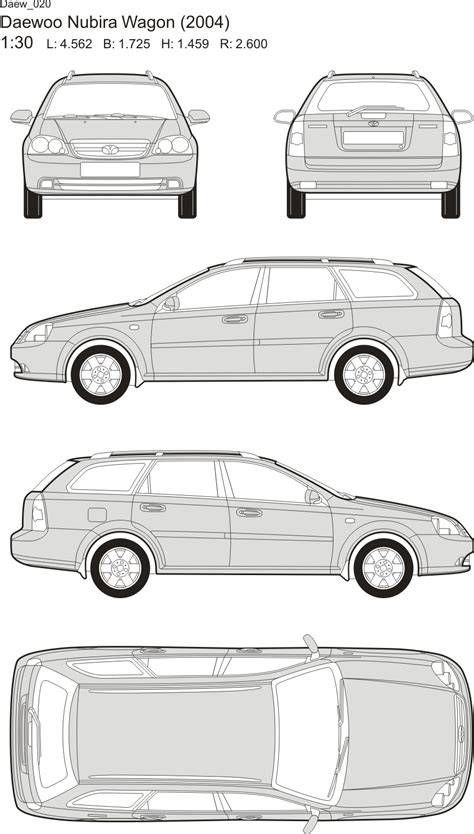
It was a small car similar in size to a Corolla, Laser, 323 or Civic, and there were sedan, wagon and hatchback variants. The Nubira was a conventional front-wheel drive car. Initially, it had a 1.6-litre double overhead camshaft four-cylinder engine that gave 78 kW and 145 Nm, but that was joined by a Holden-made 2.0-litre engine in 1998 and that delivered 98 kW and 185 Nm. Buyers could choose from a five-speed manual and a four-speed auto.
Inside, it had room for four in comfort, but five could be squeezed in at a pinch. There was adequate head and leg room front and rear, the driver could find a comfortable driving position and had controls that were sensible, logically laid out and fell within reach, while the instruments were clear and easily read. The SX was quite well equipped for its class with standard cloth trim, CD player, central locking, power mirrors and windows, fog lamps. The range-topping CDX featured alloy wheels, power windows front and rear, power mirrors and a rear spoiler.
The Series II Update
An update in 1999 brought the Series II, which included a driver’s airbag and an adjustable steering wheel. The Nubira II (J150) (facelift) was released for the 2000 model year. Over 90 improvements were made by Daewoo's Worthing Technical Centre in the United Kingdom, including an increase in passenger space and a decrease in noise, harshness and vibration.
Daewoo Nubira 1.6 и 2.0. Что по технике
Common Issues and Maintenance
The Nubira is generally robust and reliable, although perhaps not up to the class leaders like the Corolla, Mazda 323 and other Japanese models. Body squeaks and rattles are fairly common, and the plastic interior components are prone to cracking and breaking. It’s important to ask for a service record as many owners of these cars tended to ignore the need for servicing. Missing oil changes can lead to a build-up of sludge in the engine, which can result in premature wear in areas like the camshaft. It’s also important to change the cam-timing belt as recommended, as they are known to break, sometimes before the 90,000 km change point.
| Проблема | Описание |
|---|---|
| Engine/Cooling | Риск засорения масляного канала и перегрева |
| Brakes | Возможны трещины в тормозных шлангах |
| Electrical | Плавление датчика положения распредвала |
Safety and Recalls
Airbags are the number one safety feature to look for in a car, and the Nubira didn’t get one until 1999 when they were fitted with a driver’s airbag. Before buying a used Daewoo Nubira, verify all open recalls are completed via the NHTSA VIN lookup tool. Pay particular attention to Engine, Cooling System, Brakes, which are the most commonly reported problem areas. On certain passenger vehicles, the camshaft position sensor may melt resulting in a burning smell and visible smoke, which may subsequently lead to the melting of the camshaft cover and the camshaft position sensor wire harness. Certain passenger vehicles fail to conform to the requirements of federal motor vehicle safety standard no. 106, "Brake Hoses." A crack can develop in the outer rubber layer of the front brake hose(s).