Isuzu is a commercial vehicle manufacturer that produces and sells trucks and buses. From vehicle introduction to after-sales service, Isuzu maintains vehicle operation throughout the lifecycle, contributing to the sustainable development of local communities and society. The name “ISUZU” was first used as the name of the TX trucks and the BX bus in 1934. It is also the name of the holy river that flows through ISE Grand Shrine, the oldest and most important shrine in Japan.
ISUZU has supported logistics and mobility for connecting people’s lives from the outset. Since the 1936 completion of their DA4 and DA6 diesel engines, ISUZU has manufactured over 26 million engines. One cannot arrive at the present-day quality of these engines without having produced many of them.
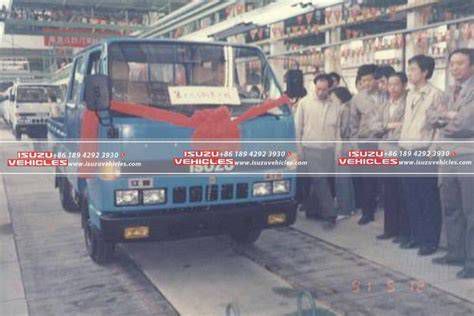
The N-Series and the Evolution of the Elf
The N-Series (known as ELF in Japan) is a representative Japanese light truck that was launched in 1959. Born in 1959, this is Japan's leading light-duty truck. Through the continuous application of the latest technologies, it has earned a top reputation for its economy, safety, and durability and reliability. The Isuzu Elf is a medium-duty truck produced by Isuzu since 1959. Outside Japan, it is known as the N-series and Q-series.
In July 2024, a new 1.5-tonne version was presented, called the Elf Mio. ELFmio is a light truck that can be driven with a Japanese regular driver's license. It is Isuzu's proposal to broaden the base of drivers in response to the chronic driver shortage in the logistics industry.
Key Milestones in Isuzu Design
- 1959: Original cab-over 2-tonne Elf (TL221) introduced.
- 1960: Introduction of a 2.0-liter diesel engine, a first for the class in Japan.
- 1972: Launch of the modern Elf Mi-Pack with front-wheel drive.
- 1984: Fourth generation Elf introduced, the first to use the long-running Isuzu N-series label.
- 2006/2007: Sixth generation Elf/N-series introduced with the iconic "twin bar" logo configuration.
Isuzu N Series Walkaround By Jazmine Keith, Sales Representative, Boyer Trucks
Engineering for Global Demands
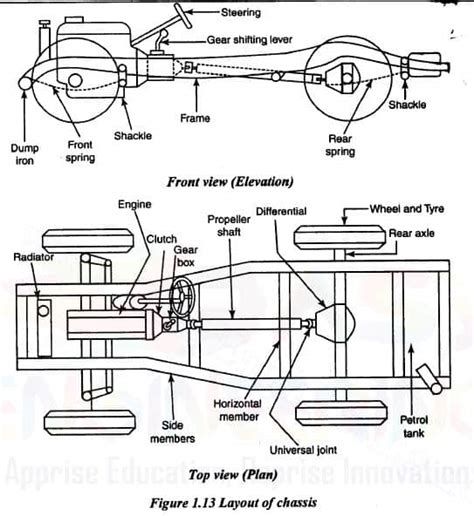
Successful truck design is not as easy as it may seem. Ensuring that individual elements and components such as the axles, chassis, and propeller shafts are strong and sturdy is only the beginning. ISUZU TRUCKS are designed to have a Gross Axle Weight (GAW) greater than a Gross Vehicle Weight (GVW). This is one of the many reasons they can run many hundreds of thousands of kilometers.
Our philosophy of “Best Balanced Reinforcement for Africa” ensures that ISUZU owners in Africa remain ISUZU owners for life. ISUZU Trucks offer a superior payload topped with great startability and gradeability, making it easy to drive and operate with a variety of customer usage specifications on demand.
| Feature | Benefit |
|---|---|
| Low-end Torque | Easy pull away and low-speed driving under load |
| GAW > GVW | Extended vehicle durability and long-term reliability |
| MIMAMORI Telematics | Efficient fleet management and fuel-efficient driving |
Innovative Technologies and Future Outlook
Isuzu has focused its efforts on providing software-based support for commercial vehicles. A prime example of this is MIMAMORI, their telematics system for commercial vehicles. It reads data from the vehicle's control computer and connects it via information and communication to support operation management and fleet management.
Furthermore, by equipping vehicles with MIMAMORI, which integrates vehicle condition information and eco-driving information, Isuzu is expanding their advanced genuine maintenance service “PREISM” which utilizes this vehicle data. The company also manufactures and sells overseas-produced vehicles, including the 1-ton pickup truck "D-MAX" and the PPV (Pick-up Passenger Vehicle) "MU-X," which are used in various countries around the world.